ServicesEquipment Installation
Loading Dock Equipment Installation in Nesquehoning, PA
We install dock levelers, vehicle restraints, seals, shelters and dock doors so they fit how your trucks and forklifts actually move. Before anything is ordered, we compare what each option costs up front with how long it lasts and what it needs each year.
Installed with the long run in mind
Putting in a new leveler or vehicle restraint commits you for years, and what you pay at purchase is only one piece of that. How sound the pit is, how the unit is anchored and wired, and how well it suits the trailers you actually see all decide whether it runs quietly or keeps calling for service. We settle those questions before any bolt is set.
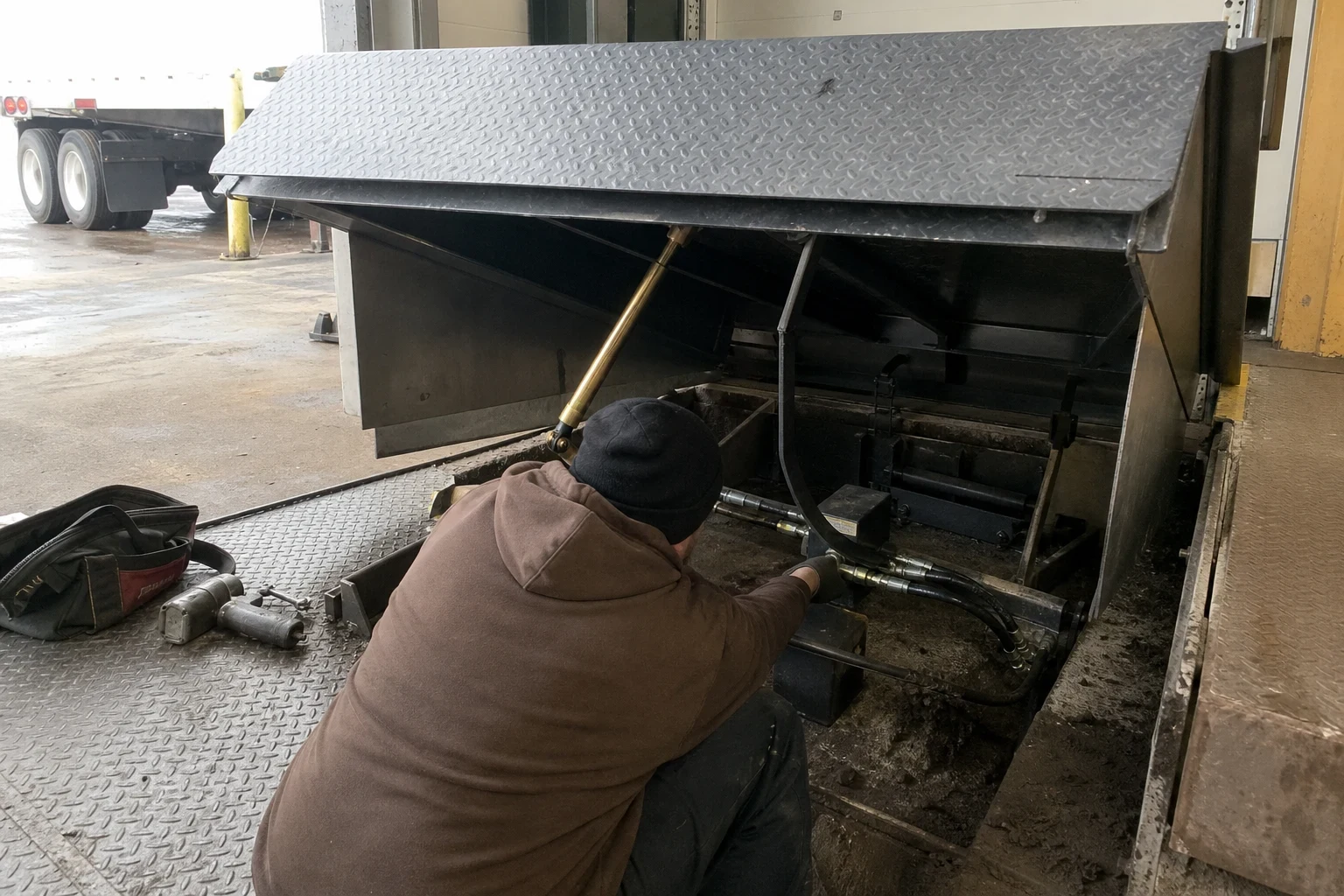
Our technicians carry factory training and certification on the equipment from the manufacturers we represent. We mount it, set up the hydraulics and wire the controls to the maker's specifications, which keeps your crew safe and gives the unit a fair chance at its full designed life.
Still choosing equipment? Our loading dock equipment sales page lays out the options. After startup, loading dock preventative maintenance keeps the new units running as they should.
What an installation covers
Survey and measurement
We measure dock height, pit dimensions, bumper projection and door openings, then ask about the trailers you actually receive. Reefers, lift-gate trucks and low-bed trailers each change which leveler length and lip size will work.
Pit and concrete preparation
We check the pit floor, curb angles and drainage for cracks, rust and settling. Damaged steel edging is repaired or replaced so the new unit sits on a sound, level base instead of inheriting old problems.
Setting levelers and restraints
Each dock leveler is set, shimmed and welded or anchored, and hydraulic units are filled and bled. Vehicle restraints are mounted to the dock face at the right height for your trailer fleet's rear impact guards.
Doors, seals and shelters
We install overhead doors, high speed doors and rolling grilles along with compression seals or shelters sized to your trailers. A good seal closes the gaps that let conditioned air and weather into the warehouse.
Controls, interlocks and lights
Control panels, inside and outside communication lights and dock lights are wired and labeled. Where you want it, we interlock the restraint, leveler and door so they operate in a safe sequence.
Testing and handover
Every position is cycled under real conditions before we leave. We show your dock staff how to operate it and give you a written record of settings for future service.
When new dock equipment makes more sense than repair
The repair bills keep coming
An older mechanical leveler that wants new springs, hinge work or a lip repair every year, with parts getting scarcer each time, is often cheaper to replace than to keep fixing over the next several years.
The trucks at your doors are different now
A lip that falls short of the trailer bed, or a deck that leaves forklifts climbing a steep slope, means the leveler no longer fits the fleet you receive. Loading slows down, and both the dock equipment and the lift trucks wear faster.
You rely on wheel chocks alone
Chocks get forgotten, and trailers drift. A vehicle restraint keeps the trailer at the dock face and tells both the driver and the forklift operator when it is safe to go.
Cold air coming in around the doors
Ripped seals and open gaps around a parked trailer let Pennsylvania winter air flood the dock. Fresh seals or shelters lower heating bills and help keep the floor dry.
A safety flag or a layout change
Maybe an audit or your insurer has pointed at the dock, or you are adding doors and changing how traffic moves. Either one is a sensible time to plan the equipment together as a single system.
How an installation runs
- 1
Conversation and site visit
We start with a phone call about your dock, your volume and what is going wrong. Then we walk the facility, measure each position and look at the pits and door openings.
- 2
Written proposal with options side by side
You get a line-item proposal that compares choices such as hydraulic and mechanical levelers by up-front cost, expected service life and routine upkeep. You decide with the long-term numbers in view, not just the sticker price.
- 3
Scheduling around your shipping
We plan the work so most of your doors stay open, usually taking one or two positions out of service at a time. Off-peak scheduling is available when your receiving window is tight.
- 4
Installation day
The work area is barricaded from forklift traffic. We remove old equipment, prepare the pit, set and weld the new unit, wire the controls and clear away debris and concrete dust before handing the door back.
- 5
Startup and training
We test every function with your crew watching, walk them through daily checks and leave the settings on record.
What drives the price of an installation
Installation prices vary from dock to dock because the equipment itself is just part of the work. The condition below it, the wiring it needs and how the job fits around your schedule all count. Each item appears on its own line in your proposal, so you can see where the money goes and how every choice changes upkeep down the road.
- Kind of equipment and its capacity
- A hydraulic leveler costs more at purchase than a mechanical one but generally needs less adjusting over the years. Rated capacity, deck length and lip size change the price too.
- State of the pit
- When the pit is solid, swapping units is simple. Cracked concrete, rusted curb angles, or a pit that must be formed new or resized means more labor and material.
- Wiring and interlocks
- Powered levelers, restraints, communication lights and door interlocks all have to be wired. If power already reaches each position, this piece stays simpler.
- How many positions
- Doing several doors in one project spreads setup and travel across them, which often brings down the price of each position.
- Schedule and access
- Night or weekend work, or work done in phases around heavy receiving, calls for extra planning and can change labor costs.
Installation questions we hear often
Something not covered here? (570) 909-2889
Will installation shut down my loading dock?
Not all of it. We usually take one or two positions offline at a time so the rest of the dock keeps moving. A replacement into a sound pit is typically measured in days, while pit repair or new construction takes longer, and we give you the expected timeline in the proposal.
Should I choose a hydraulic or mechanical dock leveler?
Mechanical levelers cost less to buy but rely on springs and linkages that need regular adjustment. Hydraulic units cost more up front, operate with a push button and generally hold up better under heavy daily use. We lay out both against your traffic so you can compare the full cost over the equipment's life.
Can you install equipment we already purchased?
Often, yes. We review the model, specifications and your dock dimensions before scheduling. If something will not fit or will create a problem later, we tell you plainly before any work begins.
Does dock equipment installation need a permit?
It depends on the scope. New electrical circuits or structural pit work may require one, while a like-for-like swap often does not. We tell you what your project needs and pull the permit when it does.
Do you install outside Nesquehoning?
Yes. We install at facilities across the surrounding area, including Jim Thorpe, Lehighton, Tamaqua and Hazleton. The same survey, written proposal and testing apply wherever your dock is.
Plan an installation that holds up
Tell us about your doors, your trailers and what is slowing the dock down. We will talk through the options and set up a site visit to measure and compare.