ServicesVehicle Restraints
Vehicle Restraints in Nesquehoning
A trailer that stays tight to the dock face lets your forklift crews work without second-guessing. We service, repair and fit hook-style and wheel-based restraints, confirm the signal lights match what the unit is doing, and give you a straight view on fixing what you have or replacing it.
What a restraint does, and when it needs a closer look
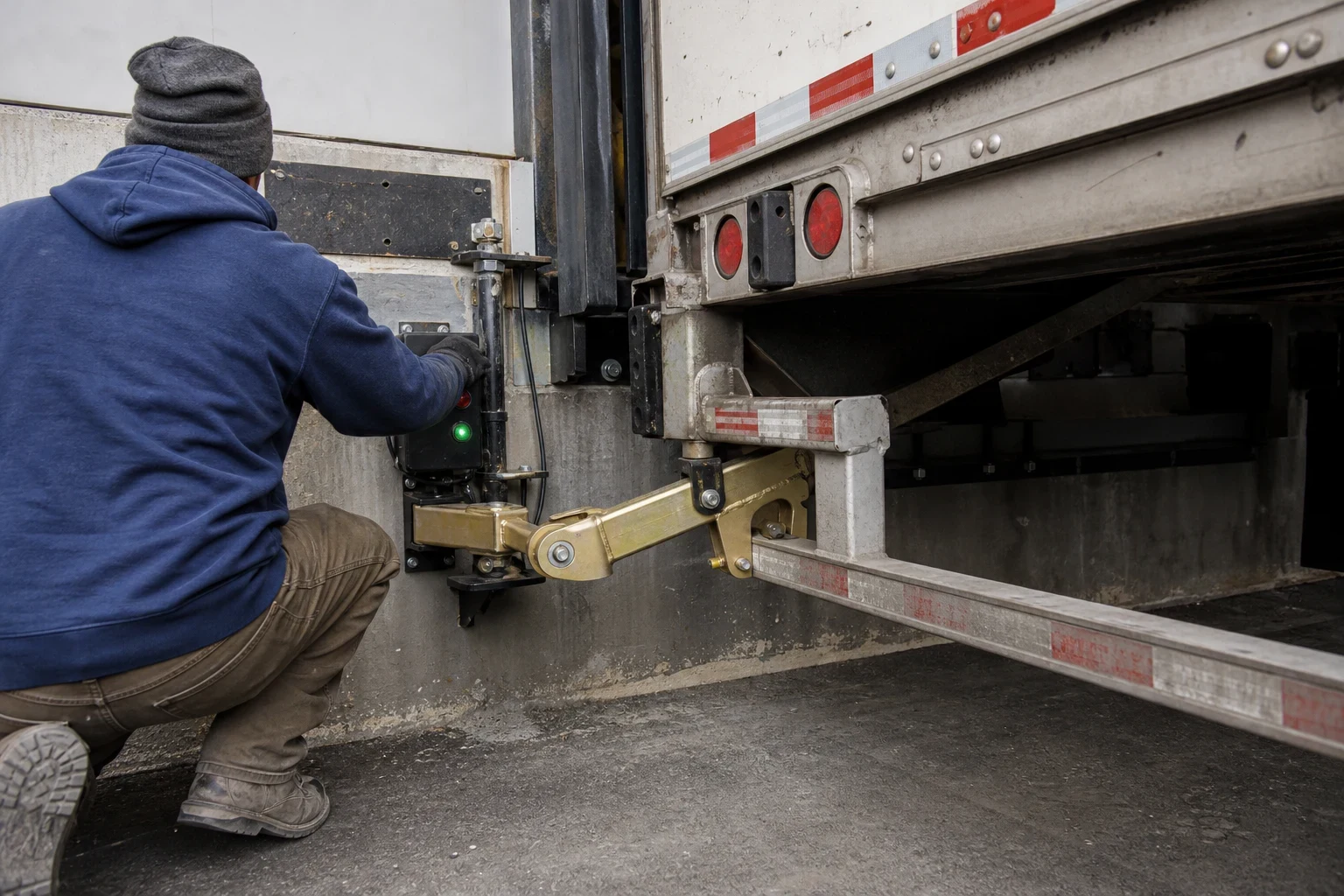
Its purpose is easy to explain. A restraint keeps the trailer pressed to the dock face so it cannot roll ahead or drift away while a loaded forklift drives across the leveler. Most units either raise a hook into the trailer's rear impact guard or brace against a rear wheel from the ground. Both work well when they suit the trucks that really back up to your doors.
Which one is right comes down to your traffic. Hook-style units are cheaper to buy and fit docks that mostly receive standard trailers. Wheel-based units cost more to purchase and install, but they catch damaged guards, lift gates and low trailers a hook can miss, and they tend to stay useful longer as fleets change. We explain those trade-offs clearly so your choice holds up years from now.
Our technicians hold factory training and certification on equipment from the manufacturers we represent, so every repair follows the maker's specifications instead of guesswork.
The vehicle restraint work we do
- Hook and carriage work
- Bent hooks get straightened or replaced, seized carriages get freed, and worn rollers and track springs get swapped out. A smooth-riding carriage is what lets the hook reach the guard at any trailer height.
- Motors, hydraulics and control panels
- We test and fix electric motors, hydraulic pumps, hoses and control panels. When a part is close to failing, you hear about it before it leaves a truck stuck at the door.
- Signal lights and sensors
- The inside and outside lights tell the driver and forklift operator when it is safe to move. We replace dead lamps, realign sensors and make sure red and green switch at the exact moment the restraint locks and lets go.
- Interlocks with levelers and doors
- Lots of facilities link the restraint to the leveler and overhead door so nothing runs out of order. We test and restore those links, and pair the job with our dock levelers and overhead doors work when the whole position needs help.
- Installing new restraints
- When replacing makes more sense, we size the new restraint to your dock height, bumper projection and mix of trailers, then anchor and wire it correctly. Complete dock package projects are on our loading dock equipment installation page.
Signs your vehicle restraint needs service
The hook misses the guard
If the hook rises but fails to catch, or catches only on some trailers, the carriage may be binding or the hook may be bent. Drivers end up falling back on wheel chocks, which defeats the purpose.
Lights stay red or never change
Signal lights that stick on one color train people to ignore them. That is the moment a restraint stops protecting anyone.
Slow, noisy or jerky travel
Grinding, hesitation or a carriage that drops unevenly usually points to worn rollers, weak springs or a tired motor. Caught early, these are modest repairs.
Rust and salt damage at the base
Road salt and slush carried in on trailer undercarriages through the winter collect around the restraint. Heavy corrosion at the track or mounting plate weakens the unit long before it stops working.
Frequent manual overrides
If staff regularly bypass the restraint to keep loads moving, something is wrong with the fit or the function. We find out which and fix it.
What drives the price of restraint work
The unit's condition and the kind of restraint matter more to the price than anything else. We go over each line before starting, so the invoice holds no surprises. Now and then a somewhat bigger repair today costs less over the restraint's life than two smaller ones a year apart.
Hook or wheel design
Wheel-based units have more parts and heavier mounting, so parts and installation run higher. They can also reduce the guard-related failures behind repeat service calls.
Powered or hand-operated
Electric and hydraulic units bring motors, pumps and controls into the job. Manual units are simpler and cheaper to maintain, but they depend more on the operator.
Rust and the state of the concrete
A rusted track or cracked concrete where the unit anchors adds labor, and can mean new mounting hardware or patch work.
Whether parts are available
Parts for current models are usually in stock. Older or discontinued restraints can be pricier to fix, which often makes replacement the better call.
Wiring and interlocks
Connecting a restraint to the leveler and overhead door controls takes extra wiring time, but it pays off in safer, more predictable operation.
What happens on a restraint service visit
- 1
We talk it through by phone
Share the make, what the restraint is doing and how busy your dock gets. We time the visit around your receiving hours so downtime stays short.
- 2
We inspect it at the dock
Where we can, we run the restraint against a trailer, look over the hook, carriage, controls, lights and interlocks, and take photos of what we see.
- 3
You get a straight recommendation
We hand you an itemized written estimate and a frank take on repair or replacement, with how long each should last and the upkeep it will need.
- 4
We fix and test it
Once the work is done, we cycle the restraint through engage and release over and over with the lights and interlocks before your crew gets the door back.
- 5
We clean up and leave notes
Old parts and debris leave the dock approach with us, and your maintenance staff get notes to keep on file. Plenty of facilities then add restraints to our loading dock preventative maintenance visits.
Vehicle restraint questions
Should drivers keep chocking wheels once a restraint is in place?
A restraint in good order handles the work chocks were meant to do, without asking a driver to walk back to the wheels. Some facilities still keep chocks on hand for the occasional trailer the restraint cannot catch. We can review the trucks you receive and tell you how often that is likely to come up.
Can you repair a restraint from a different manufacturer?
Yes, we service most common makes. On brands we represent, repairs follow the maker's own training and specifications. For other brands we confirm parts availability before quoting, so you know the repair can be finished.
Is it worth repairing an older restraint?
Often it is, if the carriage and mounting are sound and parts are available. When the base is badly corroded or parts are discontinued, replacement usually costs less over the next several years. We show you the numbers both ways.
Which is better, a hook restraint or a wheel restraint?
Hook restraints are a solid, economical choice for docks that see mostly standard trailers with intact guards. Wheel restraints suit mixed fleets, lift gates and damaged guards, and cost more up front. The better fit is the one that will catch nearly every truck you receive.
How long will the dock be out of service?
Most repairs are finished within the visit, and we schedule around your busiest receiving hours. A new installation takes longer because of anchoring and wiring, and we will give you a realistic timeline before work starts.
Do you work outside Nesquehoning?
We serve facilities across the surrounding area, including Jim Thorpe, Lehighton, Tamaqua and Hazleton. Our service areas page lists the towns we cover.
Get your restraint locking reliably again
Tell us what the restraint is doing and how your dock runs. We will plan a visit that fits your schedule and give you an honest repair-or-replace answer.