ServicesPreventative Maintenance
Loading Dock Preventative Maintenance in Nesquehoning
We service your dock levelers, overhead doors and vehicle restraints on a set schedule, so small wear gets handled before it becomes a stuck lip or a door off its track. You get a clear record of each position and fewer surprises on a busy shipping day.
Planned care costs less than unplanned repair
Dock equipment works hard and wears quietly. A hydraulic seal weeps for months before a leveler stops holding. A door spring loses tension cycle by cycle until it breaks with a trailer waiting. Preventative maintenance is the steady work of finding that wear while it is still a lubrication, an adjustment or an inexpensive part.
We look at each visit as an investment over the life of your equipment. A leveler or door that is cleaned, adjusted and tested on schedule tends to last years longer than one that is only touched when it fails, and the repairs that do come up are smaller and planned. When something is near the end of its life, we tell you plainly and lay out what repair would buy you against replacement, so the decision holds up a few years from now.
What we check on each visit
- 01
Dock levelers
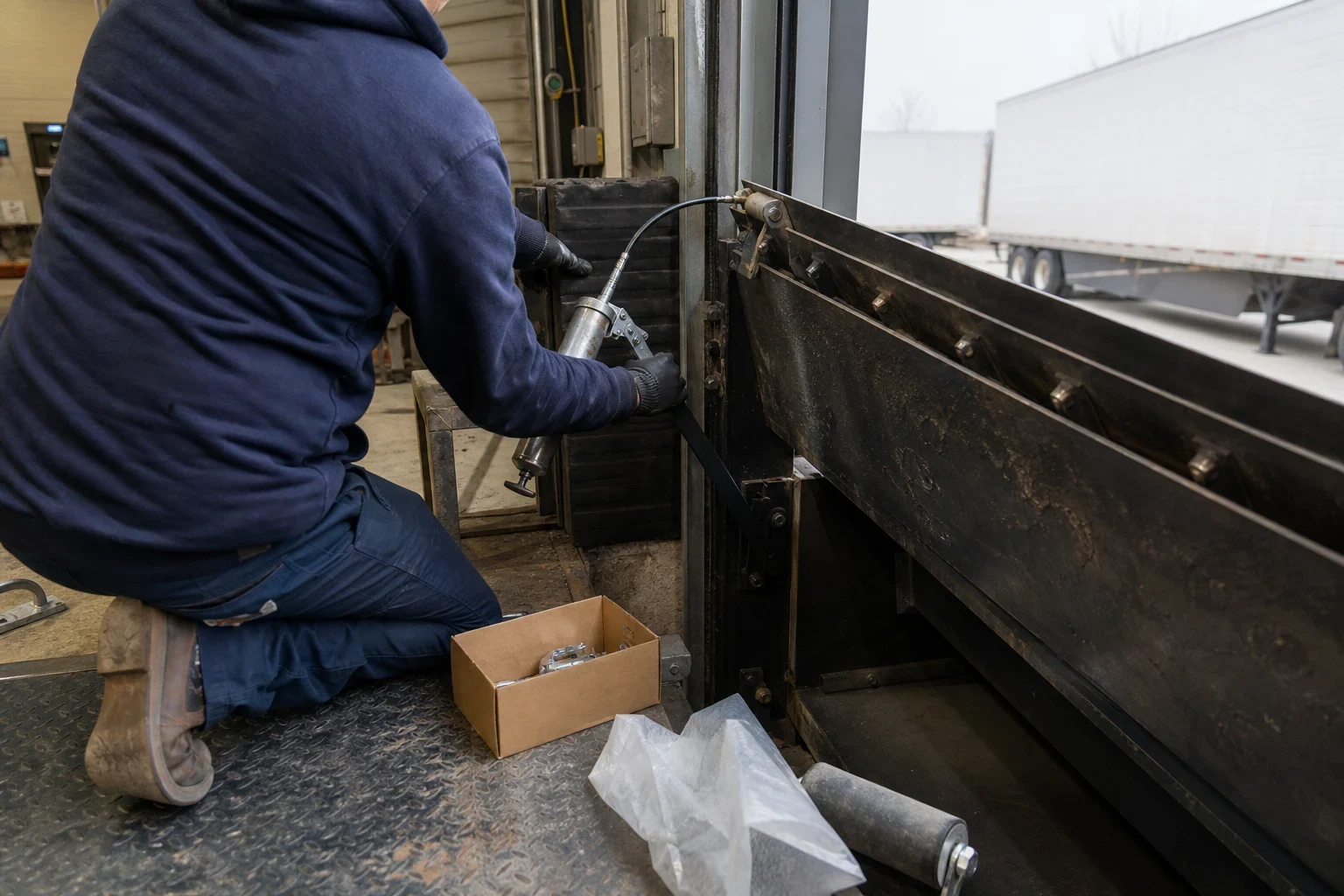
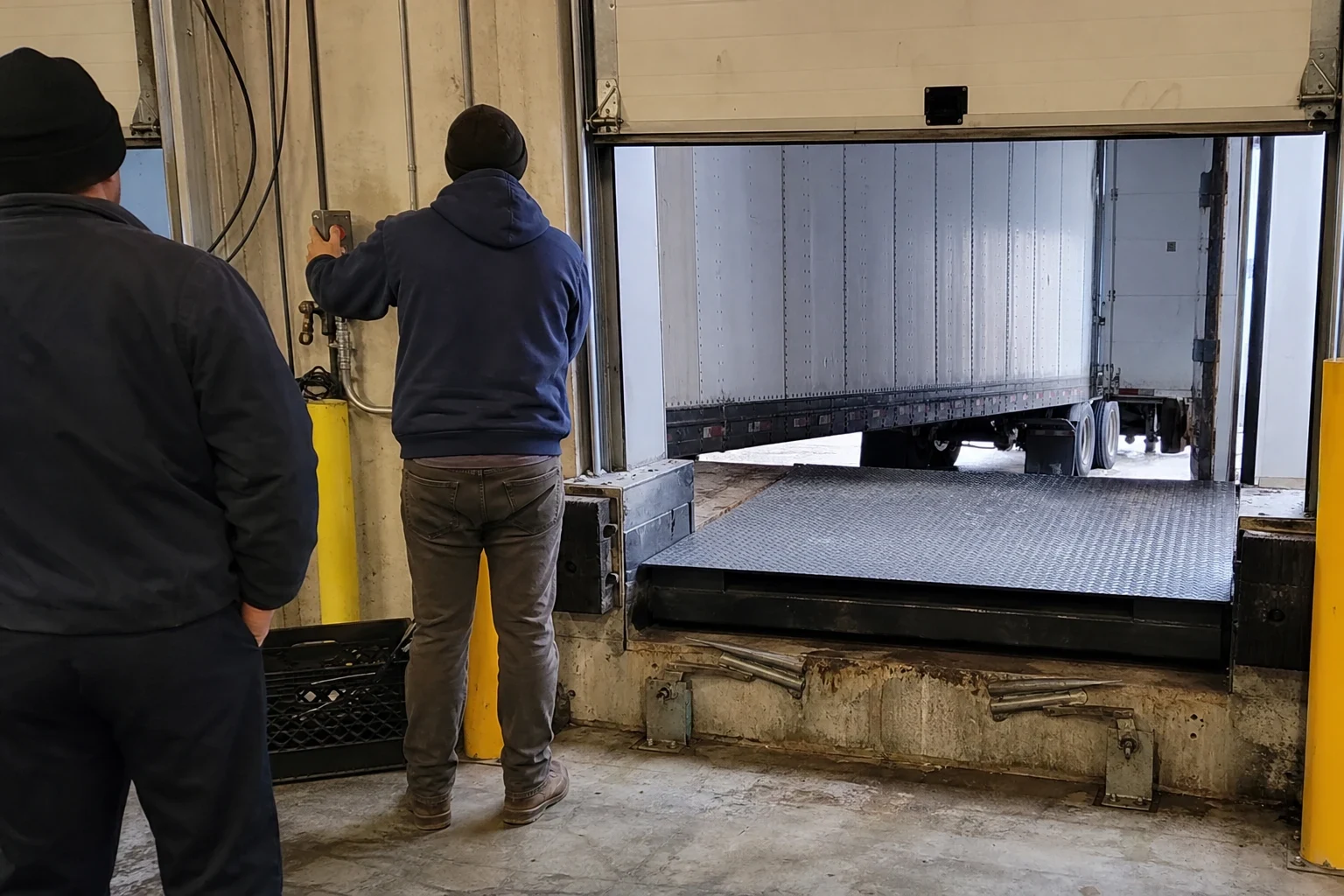
We look at the hydraulic fluid level and its condition, inspect cylinders, hoses and fittings for leaks, and check the lip hinge for wear or binding. Hold-down, lip extension and the stop are tested through the full working range, and pivot points get lubricated.
- 02
Overhead doors
Springs, cables, drums and rollers are inspected, track alignment and fasteners are checked, and we test door balance and safety reversal. We note worn bottom seals and weatherstripping, because drafts at a dock door cost real money across a long Carbon County winter.
- 03
Vehicle restraints
We make sure the hook or barrier grips the trailer bar firmly, check that the inside and outside lights agree, and test interlocks where they are installed. A restraint that shows locked while not actually holding is a safety hazard, so we take our time here.
- 04
High speed doors and rolling grilles
We inspect curtains or slats, guides, drives and sensors, then set the limits so each door opens and closes cleanly with no slamming or drifting.
- 05
A written report with photos
Each dock position gets its own notes, photos of any worn parts and a priority: fix now, plan for or keep an eye on. Over time it builds into a service history you can use for budgets and safety records.
Questions about Preventative Maintenance?
Call(570) 909-2889Signs your dock is due for attention
The leveler lip is slow or short
A lip that drops late or does not fully extend often points to low fluid, a sticking hinge or a tired cylinder. All are cheaper to address now than after the deck stops holding.
Fluid on the pit floor
Hydraulic fluid under a leveler means a seal or fitting is leaking. It also becomes a slip hazard for your crew.
A door that is loud, jerky or uneven
Grinding, shuddering or one side lagging usually means worn rollers, a stretched cable or a spring losing tension.
Restraint lights that do not match
If drivers and dock staff see conflicting signals, the communication system needs checking before someone trusts the wrong light.
No one can say when it was last serviced
If there is no record, it is worth a baseline inspection. Knowing the true condition of each position is the starting point for any sensible plan.
What happens during a maintenance visit
- 1
Timing set by your schedule
We go over your shipping hours and book the visit for your quieter stretches. One position is serviced at a time, so the rest of the dock stays in use.
- 2
Every position checked and run
Our technicians lock out each unit, inspect it, clean and lubricate it and make any adjustments. Each one is then cycled fully before it returns to service.
- 3
Minor fixes done while we are there
With your approval, small adjustments and common wear parts are taken care of during the visit. Bigger items are written up so you can decide in your own time.
- 4
Your report and next date
We go over our findings with you, photos included, and suggest when to come back based on how hard your dock really works.
What shapes the cost of a maintenance plan
Pricing depends on how much equipment you have and how hard it works. We explain each line on the phone and in writing before any work begins, so you know what you are paying for and why.
- Number of positions and doors
- A single receiving door at a store is a short visit. A distribution center with a long row of levelers, doors and restraints takes more time.
- Equipment type and age
- Hydraulic levelers, high speed doors and restraints with interlocks take longer to service than simpler mechanical units. Older equipment usually needs more adjustment.
- Visit frequency
- Multi-shift operations generally benefit from more frequent visits. Spreading care across the year often lowers the cost of repairs.
- Parts found worn
- Seals, rollers, cables and springs are quoted separately when they need replacing, and you approve them before we install anything.
Common questions about dock maintenance
How often does our dock equipment need a service visit?
That comes down to how much traffic your dock sees. A store taking a handful of deliveries a day can often get by on two visits a year, while a warehouse running several shifts usually needs a visit every quarter. Once we have seen your equipment, we suggest a schedule that fits it.
Will a maintenance visit hold up our shipping and receiving?
We take one dock position at a time and time the work around your rush periods. In most buildings, trucks keep loading at the other doors while we are there.
Do you service equipment made by different manufacturers?
We do. Our technicians hold factory training and certification on the equipment from the manufacturers we represent, and we also work on most of the common leveler, door and restraint brands found on working docks.
What if you find a part that is badly worn?
We walk you through the photos, explain what could happen if it is left alone and put the repair price in writing. When a unit is nearing the end of its life, we set repair and replacement next to each other over the next several years so you can pick. No work goes ahead until you approve it.
Can our maintenance records support our safety program?
A dated history for each dock position shows the equipment is checked and tested on a regular basis. Plenty of facilities file our reports with their own safety and compliance paperwork.
Start with a baseline inspection
We will look at every position on your dock and give you a clear picture of where each piece of equipment stands. From there, you decide how often you want us back.